Uncategorized

EMC testing equipments

Understanding Electromagnetic Compatibility (EMC) Testing: A Comprehensive Guide

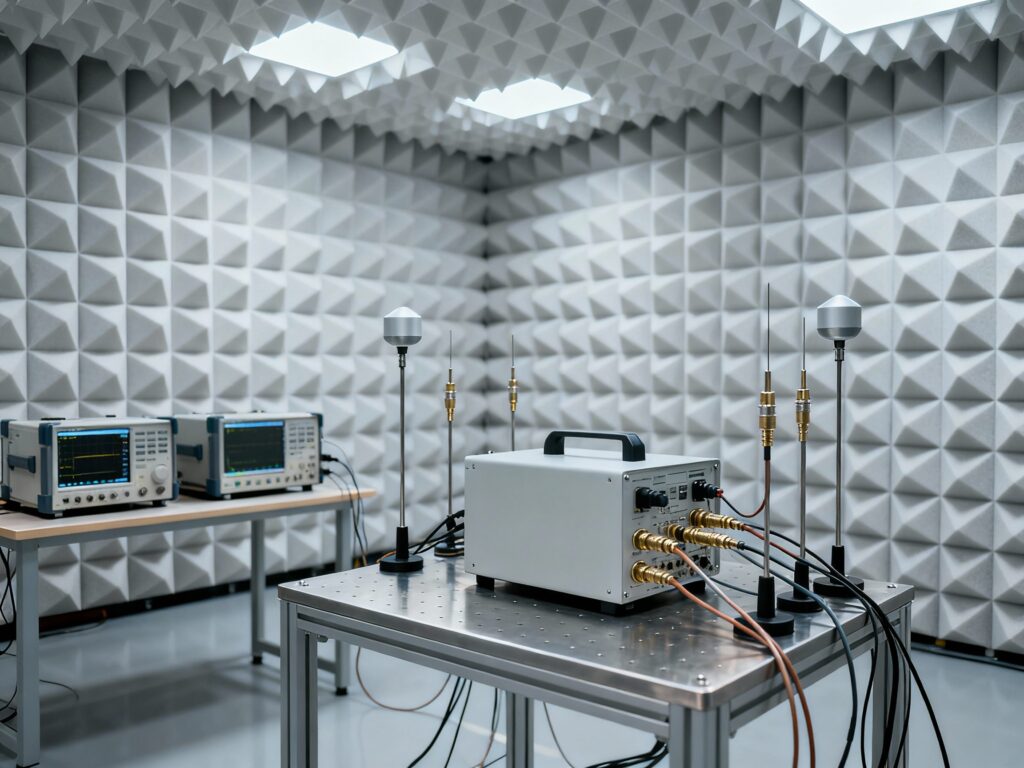
Electromagnetic compatibility (EMC) testing is often the unsung hero behind the reliable operation of modern electronic devices. This process ensures that your smartphone, medical equipment, car control system, or any electronic gadget does its job without causing trouble for other equipment nearby and can function even when surrounded by electromagnetic signals. Let’s take a closer look together at how EMC testing works, why it’s needed, and how you can approach it for your own products or interests, sharing actionable advice and friendly explanations along the way. What is Electromagnetic Compatibility (EMC) Testing? EMC, short for electromagnetic compatibility, means a device is able to work well in spaces full of electromagnetic signals, without messing with other electronics or becoming unreliable due to interference. In plain terms, EMC testing checks that your device can share airwaves and electrical lines with its neighbours, while still performing as intended. This simple need drives a wide array of EMC standards, regulations, and lab-based tests every manufacturer must address before launching new tech. Why EMC Testing Matters Think about living in a sea of electronics, phones, routers, smart thermostats, cars, even medical gear like pacemakers. Each device emits electromagnetic energy (sometimes intentionally, like a Wi-Fi router, sometimes not, like a blender). EMC testing is vital to ensure one device doesn’t accidentally make another fail, avoiding anything from annoying glitches to downright dangerous malfunctions.  EMC testing is essential for: Regulatory compliance: Most countries require products to be certified before they’re sold. User safety: Prevents interference that may endanger lives. Reliable operation: Prevents random failures due to outside electromagnetic disturbances. Global market access: Certification is often mandatory for international sales. Customer satisfaction: Fewer returns and service calls, better reputation. The Key Components of EMC Testing EMC testing is made up of two major types: Emissions Testing: Measures the amount of electromagnetic energy your device gives off. This ensures nothing goes over recommended levels for airwaves or power cables, which could mess with other equipment. Immunity Testing: Assesses how well your device holds up against interference from other electronics or environmental noise. Both are required by regulations, and nearly every electronic device is subjected to these validation steps. Typical EMC Test Types Radiated Emissions: Checks the radio signals your device puts into the air. Conducted Emissions: Looks at signals and noise traveling through wires and cables. Radiated Immunity: Tests if your device can continue to function in strong electromagnetic fields. Conducted Immunity: Simulates disturbances fed directly into power or signal lines. Electrostatic Discharge (ESD): Mimics what happens when people or objects touch your device and transfer a static electric shock. EMC Standards and Regulatory Frameworks Regulatory bodies across the world define standards that spell out how much electromagnetic emissions are permitted and what tests are needed. For instance: United States: FCC Part 15 Europe: CE Marking per the EMC Directive Canada: Industry Canada rules International: CISPR, IEC, ISO standards Product categories may have additional specialised standards, such as MIL-STD-461 for defence, RTCA–DO-160 for aerospace, or medical device-specific guidelines. It’s always important to align your testing or certification strategy to your target market’s regulations. The EMC Testing Process: Step-by-Step Let’s break down how most manufacturers or design teams approach EMC testing: 1. Pre-Compliance Testing Before heading to an official lab for certification, companies often run “pre-compliance” tests using in-house setups. This cost-effective step helps catch obvious issues early, reducing project risks and avoiding costly retests. Common pre-compliance tools include small anechoic chambers, basic EMI receivers, and simple shielding setups. 2. Test Planning A successful EMC testing plan considers: Intended use of the product (home, industry, medical, automotive) Applicable standards and regulations Physical setup: location, cabling, grounding, mounting Test samples and documentation Test environment: temperature, humidity, supply voltage 3. Emissions and Immunity Tests Devices are then placed into shielded test chambers or labs, connected to antennas and monitoring equipment, and systematically checked for emissions and immunity at defined frequencies. Sophisticated labs use automated test scripts, varied interference sources, and thorough logging. 4. Reporting and Improvements Test results are documented and analyzed; devices failing any limits often undergo design tweaks (component shielding, layout changes, filter addition) before going through retesting. 5. Certification Passing results and proper documentation form the basis for regulatory certification, unlocking access to chosen markets. Real-World Applications and Product Categories EMC testing isn’t limited to high-tech gadgets; it applies broadly: Consumer electronics (phones, laptops, TVs) Medical devices (defibrillators, pacemakers, imaging systems) Automotive systems (engine controls, sensors, infotainment gear) Industrial equipment (robots, control panels, drives) Communication networks and wireless modules Aerospace components In all these fields, EMC matters, even the smallest module can create serious problems if it’s not designed to operate harmoniously within an electromagnetic “ecosystem”. EMC Testing Equipment Modern EMC labs are equipped with specialized gear for accurate measurements and challenging real-world environments, including: Anechoic chambers (block outside signals for clean testing) EMI receivers and spectrum analyzers (detect weak signals) Calibrated antennas (capture emissions) Electrostatic discharge simulators Injection probes for conducted immunity Data recording and automation systems. Professional reports from accredited labs can also speed up product launch timelines. Best Practices for Success To help ensure both compliance and product reliability, consider these friendly tips: Start testing early: Pre-compliance tests save money and stress. Document thoroughly: Keep records of everything for easy retests. Choose the right lab: Accredited labs have the right equipment and expertise. Understand standards: Align with region-specific guidelines from the start. Design for EMC: Budget for shielding, grounding, and layout strategies during product development. Build for future updates: Products may need retesting after design changes or in new markets. Challenges and Solutions EMC failures can be frustrating, but most stem from simple causes: Poor grounding and cable routing Inadequate shielding or filters Unshielded connectors or displays Unexpected interactions in software/firmware Quick fixes often involve redesigning printed circuit boards (PCBs), adding ferrite beads, improving chassis shielding, and rerouting cables. Engage with EMC experts or labs for advice as soon as issues appear. Final Thoughts Electromagnetic compatibility testing is a critical part of modern electronics development.

Understanding Electromagnetic Compatibility (EMC) Testing: A Comprehensive Guide Read More »

IP rating and IP testing

Ingress Protection (IP) Testing and Ratings: The Ultimate Guide

You’ve probably seen an IP rating on your gadgets, and you’ve probably wondered, What does this actually mean? Is it important? Will it affect your device’s ability to survive in different conditions? Let’s break it down and understand everything about what Ingress Protection (IP) ratings are all about, how they’re tested, and why they matter for your devices. What is IP Testing? IP testing is all about making sure that your device can endure the elements, whether that’s dust, dirt, or water. If you’re using it outdoors, in tough conditions like in a workshop, or in extreme weather conditions, you will be wondering if this device will be able to withstand these conditions. These IP ratings will give you the assurance that these devices will not get damaged after being exposed to dirt or water.  IP ratings aren’t just numbers that are found on a product box , They’re obtained as a result of detailed and careful testing and engineering to make sure that your device will perform reliably in tough conditions like these. Before getting into the specifics of IP testing and ratings, it’s essential to know that these ratings are standardized. This is to help you understand how well your device will be able to withstand when exposed to things like  dust, dirt, moisture, or water. Without these ratings, it would be hard to figure out if your gadget can really handle the rough stuff. Why Do IP Ratings Matter? Without IP ratings, it would be difficult to assess whether a gadget could survive exposure to dirt or water. These ratings offer peace of mind, ensuring that your device will perform reliably in rugged conditions. Moreover, the standards behind IP ratings are universal, making it easy for you to compare devices and choose the right one for your needs. Breaking Down the IP Rating Let’s get into what an IP rating means. IP ratings are always two digits long, i.e, the first digit refers to how well the device is protected from solids (like dust), and the second digit refers to how well the device is protected against liquids (like water). Let’s break them down : The First Digit: Protection Against Solids 0: No protection at all. 1: Protected against objects larger than 50mm, like hands or large tools. 2: Protected against objects larger than 12mm, like fingers. 3: Protected against objects larger than 2.5mm, like wires or small tools. 4: Protected against objects larger than 1mm, like screws and small wires. 5: Dust-protected – some dust might get in, but it won’t interfere with the operation and performance of the device. 6: Dust-tight – no dust can enter at all. The Second Digit: Protection Against Liquids 0: No protection against liquids. 1: Protected against vertically falling water (light rain). 2: Protected against water falling at an angle (up to 15 degrees). 3: Protected against water sprayed from a 60-degree angle. 4: Protected against splashing water from any direction. 5: Protected against low-pressure water jets from any direction (like a garden hose). 6: Protected against powerful water jets. 7: Protected against immersion in water up to 1 meter for 30 minutes. 8: Protected against continuous immersion in water beyond 1 meter. 9: Protected against high-pressure water & high-temperature water jets. So, a device with an IP67 rating, means that the device is dust proof and protected against immersion in water upto 1 meter. Understanding these ratings is vital as these ratings will tell you exactly what kind of environments the device can handle. Want to ensure your device can handle the elements? Contact Elenergy for expert IP testing services today! Get in touch How Do Devices Achieve Their IP Rating? You might be wondering, How do devices actually achieve their IP rating?A lot of engineering goes into making sure that the devices we use every day can withstand extreme conditions. There’s a lot of Design, material choices, and that goes into achieving that perfect IP rating. Here’s how it works: 1. Design & Engineering Device manufacturers work hard to design their products inorder to keep out the dust and moisture by using sealed casings, rubber gaskets, and protective coatings to ensure that nothing gets in. For example, waterproof phones often have tightly sealed ports and a special coating on the circuit board to prevent damage and protect the internal circuits from water. 2. Materials Some materials have better ressistance to water and dust comparitively . Metal, plastic, and glass are commonly used because they are able to form a tight seal and can withstand these elements. Materials like gaskets, seals, and adhesives are also used and it help to keep water and dust from getting inside by creating an impermeable barrier. 3. Testing Once the design and materials are confirmed, then the manufactured device is subjected to rigorous Ingress Protection (IP) tests. This is where things like dust chambers and water tanks are used to make sure that the device meets the standards of its IP rating. Types of IP Testing 1. Dust Ingress Testing (Solid Object Testing) In Dust Ingress testing, the device is placed in a dust chamber and exposed to fine dust particles for a specific period. The goal is to see how well the device holds up to dust exposure over time. For IP5X and IP6X, devices are subjected to this type of testing to make sure that no dust will interfere with the device’s operation. IP5X: Some dust may enter, but it won’t impact functionality. IP6X: No dust can get inside the device. 2. Water Resistance Testing Water resistance is tested by spraying or submerging the device in water. The device is subjected to water jets, sprays, or even full submersion, depending on its rating. This test is done to find out whether your device will be able to survive a splash, a downpour, or even being submerged in water. Testing standards vary depending on the rating. For example: IPX7: The device can handle being submerged in water for 30 minutes at

Ingress Protection (IP) Testing and Ratings: The Ultimate Guide Read More »

mechanical testing

Mechanical Testing: Types, Benefits, and Applications Explained

Mechanical testing is an indispensable part of engineering and product manufacturing. These tests provide us with insights regarding the strength, durability, and performance of materials and components. Mechanical testing helps us to evaluate and measure the physical properties of the raw materials, like hardness, strength, elasticity, and ductility. During these tests, the materials are subjected to various forces, and then we evaluate the results we get. This way, we are able to get an understanding of the raw materials and how they will perform under various conditions. This will help us ensure the safety and Reliability of the product and the safety of the customer. It is essential to ensure that all the products that have been manufactured perform safely and efficiently in real-world conditions. Mechanical testing is done on each component and material used in products to ensure that these products meet the regulatory standards and safety requirements set by each country. In this guide, you can learn about Mechanical testing, types, standards, future trends, and how ELenergy’s Mechanical testing lab helps industries with cutting-edge solutions What is Mechanical Testing? Mechanical testing involves evaluating the mechanical properties of materials in controlled conditions. It assesses properties like strength, ductility, toughness, and fatigue resistance to ensure materials can withstand the conditions they will face throughout their lifespan. This process helps manufacturers and engineers understand how materials behave under stress and failure, providing essential data for quality control, certification, and failure analysis. Historical Evolution of Mechanical Testing Mechanical testing originated during the Industrial Revolution when blacksmiths and early engineers evaluated the strength of metals manually. Over the years, standardized techniques were established, and organizations such as ASTM and ISO introduced universal guidelines. Today, mechanical testing has evolved into a highly technical field that employs precise instruments, computer modeling, and advanced analytical methods. Why Does Mechanical Testing Matter in Modern Industries? As we know, Mechanical testing is a standard and also an important part of the designing and manufacturing process. Mechanical testing is required for each equipment to ensure the safety of the equipment and the people using them. It is very important to know the mechanical properties of the raw materials before using them for the final product, as this will help you save costs that might occur due to equipment failure. Hence, Mechanical testing is an important aspect for determining the properties of the raw materials and making sure that it meets the benchmarking standards.   Key Benefits of Mechanical Testing Ensures Safety and Reliability:Mechanical testing verifies that products can endure stress and environmental conditions throughout their lifecycle, ensuring reliability and safety. Compliance with Regulatory Standards:Mechanical tests provide documentation and data to meet national and international certifications, such as: ASTM International Standards ISO 9001 (Quality Management Systems) ISO 17025 (Testing and Calibration Labs) Improves Product Quality:Testing helps improve product quality by revealing weaknesses and defects that could compromise performance and safety. How Can Mechanical Testing Help You? Mechanical testing consists of various tests, in which you can opt for a particular test based on your requirements. Never think of mechanical testing as an expense, as the initial investment in mechanical testing will save you far more, a mechanical test will provide you with the properties of the raw material, and it will help you to determine the quality  and durability of your product. Mechanical testing is never an expense; it is an investment that will help you save costs and help you in manufacturing the best products and ensuring the safety of your customers. Here are some benefits of doing mechanical testing:   Ensuring Safety and Reliability Mechanical testing will help you ensure that your products will be able to endure the stress and environmental conditions that they will be facing throughout their lifecycle. Testing the products and materials will help us verify their reliability and safety. Mechanical testing has been done on everything from construction materials to automotive parts, aerospace components, and electrical meters. Meeting regulatory standards Many industries, such as electronics, construction, and automotive, have set national and international standards that help to ensure the necessary safety and compliance of the product. Mechanical testing will provide you with the documentation and data to meet national and international certifications. Common standards include ASTM International standards ISO 9001 (quality management systems) ISO 17025 ( testing and calibration labs) Improving Product Quality and Performance Mechanical testing helps manufacturers to ensure that their products are of the highest quality standards. Mechanical testing allows manufacturers to assess the tensile strength, hardness, and vibration resistance. With this information, manufacturers can improve their products’ performance and reduce the risk of failures in the field. This is especially important in the medical and energy industries, where product failure can have serious consequences. In conclusion, these are the benefits that are gained by mechanical testing your products :   Determine the properties of the raw materials under various scenarios, such as bending, compression, tension, or twisting. Identify the defects and weaknesses of the material that might affect the working of the product and ensure the safety of the product. Mechanical testing will help you to verify that your equipment meets the minimum benchmark industrial standard of that particular application. By identifying the mechanical properties of various raw materials, you will be able to choose the best cost-effective and suitable material for your product. Mechanical testing ensures the safety and reliability of a manufactured product, which is important to have a reputation in the market, and also to achieve customer satisfaction Types of Mechanical Testing Methods According to Wikipedia, Mechanical testing consists of various tests and is divided broadly into two types    The first type of test is used to determine the material’s mechanical properties, regardless of its geometry. The second type of test is used to determine the structure’s response to an action. For example, composite beams, aircraft structures, etc., are tested to destruction. The mechanical testing industry is vast and varied, offering numerous specializations and tests. Every test type serves its own specific purpose; choosing

Mechanical Testing: Types, Benefits, and Applications Explained Read More »