

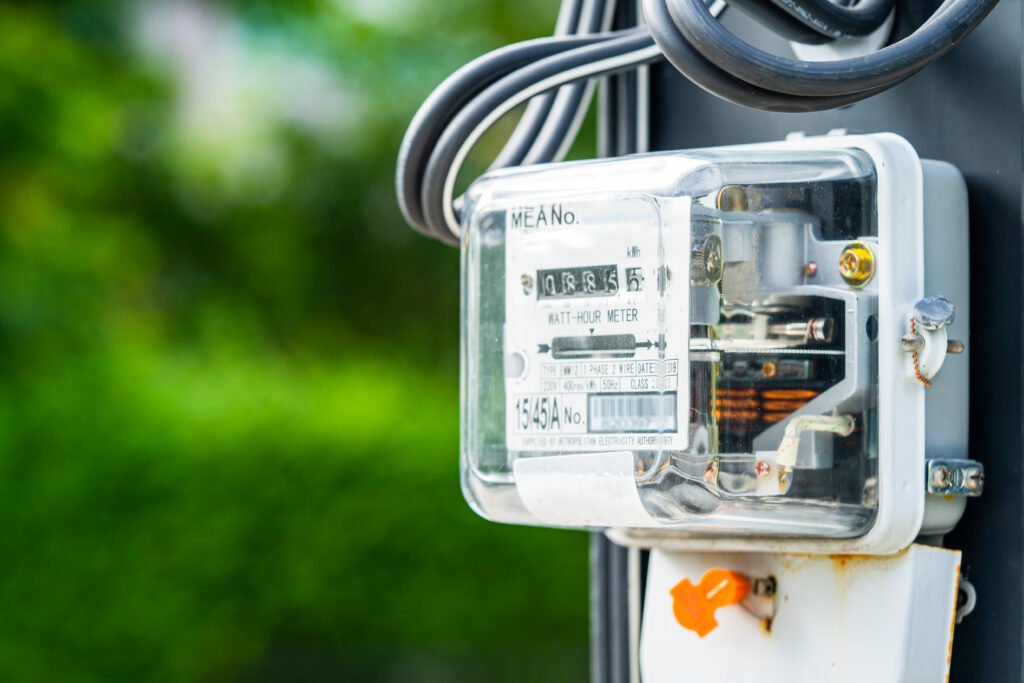
How Are Smart Meters Tested and Certified in India?
As of June 30, 2026, India had installed 7.24 crore smart meters against 20.33 crore sanctioned under the Revamped Distribution Sector Scheme (RDSS), according to a Ministry of Power reply in Parliament (T&D India, August 2026). That leaves roughly 13 crore meters to be manufactured, tested, and deployed before the scheme’s March 2028 sunset date. Every single one of those meters must first pass type testing at a recognized laboratory. No test report, no BIS licence. No BIS licence, no tender.Let’s see the full journey: the standards that apply, every test group a meter faces, how certification works, and the importance to pick a lab that won’t slow you down. Key Takeaways In 2026, India’s RDSS program has 20.33 crore smart meters sanctioned but only ~7.24 crore installed (Ministry of Power via T&D India, 2026). Testing capacity is now a bottleneck for manufacturers. BIS certification under IS 16444 is legally mandatory for smart meters under the Smart Meters (Quality Control) Order, 2023. Type testing spans six groups: electrical accuracy, EMC, climatic, mechanical, ingress protection, and DLMS/COSEM communication. Test reports from NABL-accredited, BIS-recognized labs are what DISCOMs and BIS actually accept. Why Does Smart Meter Testing Matter So Much in 2026? In 2026, smart meter installation is running at roughly 1.35 lakh meters per day, per the Electronics India analysis “The Smart Meter Mandate” (Electronics India, 2026). Testing matters because it’s the legal and commercial gate: an untested meter can’t get BIS certification, and an uncertified meter can’t legally be sold or supplied to a DISCOM. There’s also the field-failure math. A meter that drifts out of accuracy class or dies in a monsoon gets replaced at the utility’s cost — and at the manufacturer’s reputation. The RDSS itself exists to cut Aggregate Technical and Commercial (AT&C) losses, which fell from 21.91% in FY21 to about 15% in FY25 as smart metering scaled (Ministry of Power data via BillUnits smart meter guide, 2026). Meters that mismeasure defeat the entire program. CareEdge Ratings, in its report “The $20–25 Billion Smart Metering Opportunity,” estimated total investment of about ₹1.25 lakh crore for 25 crore meters (CareEdge Ratings, 2025). With money at that scale, utilities specify tests aggressively — and check the lab’s accreditation on every report. Which Standards Govern Smart Meter Testing in India? The core standard is IS 16444, which specifies AC static watthour smart meters, supported by IS 13779 for static meters, IS 15959 for DLMS/COSEM data exchange, and the IEC 62052/62053 series internationally (Bureau of Indian Standards, IS 16444). Utilities additionally reference CBIP technical report guidelines in tenders. Here’s how they fit together: Standard What it covers Who it applies to IS 16444 (Part 1) AC static direct-connected smart meters, Class 1 (±1%) and Class 2 (±2%) Residential and small commercial smart meters IS 16444 (Part 2) AC static transformer-operated smart meters, Class 0.2S / 0.5S / 1S Industrial, HT, feeder and DT metering IS 13779 AC static watthour meters (Class 1 and 2) — the base test methods Conventional static meters; referenced by IS 16444 IS 15959 (Parts 1–3) Data exchange for meters — the Indian DLMS/COSEM companion specification Communication and interoperability testing IEC 62052-11 / IEC 62053-21/-22/-23 General requirements and accuracy classes internationally Export markets and IEC-aligned tenders IS/IEC 60529 Ingress Protection (IP) code Enclosure dust and water protection A useful way to think about it: IS 16444 defines what a smart meter must survive, IS 13779 supplies much of the how on the electrical side, and IS 15959 makes sure the meter talks to the head-end system correctly. What Tests Must a Smart Meter Pass Before Certification? A smart meter type-test program covers six groups — electrical accuracy, EMC, climatic, mechanical, ingress protection, and communication — drawn from IS 16444 read with IS 13779 and IS 15959 (Bureau of Indian Standards). One sample set goes through the full sequence; a failure in any group means retesting after correction. Test group What's checked Example tests Electrical & accuracy Measurement error across load, power factor, voltage and frequency variation; starting current; no-load (creep); power consumption Accuracy at reference conditions, influence-quantity tests, self-heating EMC (immunity & emissions) Survival of real-world electrical disturbances without damage or mismeasurement ESD, RF field immunity, fast transients (EFT), surge, voltage dips — per the IEC 61000-4 series Climatic / environmental AC static watthour meters (Class 1 and 2) — the base test methods Conventional static meters; referenced by IS 16444 IS 15959 (Parts 1–3) Data exchange for meters — the Indian DLMS/COSEM companion specification Communication and interoperability testing IEC 62052-11 / IEC 62053-21/-22/-23 General requirements and accuracy classes internationally Export markets and IEC-aligned tenders IS/IEC 60529 Ingress Protection (IP) code Enclosure dust and water protection Type Tests, Acceptance Tests, and Routine Tests Are Not the Same Thing Type tests are the full destructive-grade qualification of a meter design, done once per model at an independent lab. Acceptance tests are a subset a utility runs (or witnesses) on sample lots at delivery. Routine tests are quick functional checks the manufacturer performs on every unit off the line. Why does the distinction matter commercially? Because tenders ask for type test reports from independent, accredited labs — usually not older than a few years. A manufacturer with in-house routine testing still needs third-party type reports to qualify. And when a design changes materially (new metering IC, new enclosure, new comms module), the type test clock resets for affected tests. How Does BIS Certification for Smart Meters Actually Work? Since the Smart Meters (Quality Control) Order, 2023 came into force, BIS certification under IS 16444 has been mandatory — manufacturing, importing, or selling non-conforming smart meters is an offence under the BIS Act, 2016 (Bureau of Indian Standards; Government of India QCO, 2023). The path, in brief: get the meter type-tested at a recognized lab, apply on the BIS Manak Online portal with the test report, clear the factory audit, and receive the ISI-mark licence. The certification step deserves its own deep treatment — timelines, documents, Part 1
How Are Smart Meters Tested and Certified in India? Read More »